Wednesday, August 24, 2011

Dietary Changes Part 1: What to Eat

Superfoods for Stress-Relief
When people hear the phrase “diet,” many think of the crash diets that have been so popular for the last 40 years or more. In recent decades, these diets have included very extreme no-sugar, no-carbohydrates, no-fat, no-meat, and no-just about any food category that you can think of. This had led many people to the unfortunate association of the word diet with the concept of deprivation.

In actuality, the word “diet” simply means the foods eaten by a particular person or group.  Our English word diet comes from the Greek diaita, meaning “manner of living.” So our diet is simply the foods and drinks we consume as part of our manner of living. Changing this part of our lives means just that, a change – not the beginning of some arduous period of self-deprivation. It also does not mean a period of weeks or months before we can see some results from this change. In fact, some foods can give you a nearly instant stress-reducing boost.

Fortunately, the physical signals that we are overstressed are limited and relatively well understood. This means that we can identify them and find anti-stress foods that combat these physical symptoms. These symptoms include a sharp increase in the stress hormones adrenaline and cortisol, an increase in heart rate and blood pressure, and rapid breathing leading to an accumulation of toxins in the blood. Stress also depletes our bodies of many important vitamins, especially Vitamin C, the B vitamins, calcium, and zinc. So what foods will reduce these symptoms, provide important nutrients, and lower our stress response?

What to Eat

Vitamin C is the primary component to look for when you want an instant stress reduction. While you can pop a vitamin pill, this form of Vitamin C is not only more difficult for your body to absorb than “fresh” from a fruit or vegetable, it also dissolves more slowly. If you want the fastest stress relief, eat fresh fruits containing lots of Vitamin C, which begins to make its may to your bloodstream the moment you take a bite, via tiny capillaries in your mouth. Why Vitamin C? Because studies have shown that people with high levels of Vitamin C in their system have lower blood pressure and much lower levels of cortisol. It has even been shown that having Vitamin C before a stressful event can help prevent the spike of cortisol, thus keeping your stress-response at bay. So instead of twiddling your thumbs or pacing before a big meeting, try eating some Vitamin C rich foods. The best of these is, believe it or not, broccoli.  Others include apples, all citrus fruits, berries, and melons. In a pinch, if you have a cup and a water cooler handy, you can try dissolve-in-water Vitamin C products like EmergenC powder packets. While still not as good for you as fresh fruits, these formulas are designed to be easy to absorb as well as the ultimate in portability.

Vitamin C is not the only vitamin that gets depleted during times of stress. B-vitamins, which help with concentration, stress-reduction, and regulation of the sleep cycle, need to be replenished as well. The best for providing some easy-access B? Broccoli again. It is filled with B-vitamins, and also contains folic acid, which has been proven to reduce stress, anxiety, panic, and depression. Eating mixed nuts is a good way to go as well, and the crunching can help to keep you from grinding your teeth. All nuts contain some B-vitamins, and certain nuts contain other beneficial nutrients as well. Brazil nuts give you zinc which can be drained by anxiety, and almonds may be the best stress-reliever in the nut family, providing vitamin B2, vitamin E (which fights cellular damage from chronic stress), magnesium, and zinc. It is recommended that you eat the nuts slowly, letting the crunching relieve some stress. This will also keep you from overeating, as nuts can contain a high amount of fat.

We all know that healthy foods provide all kinds of vitamins and minerals. So in addition to broccoli, citrus fruits and nuts, which ones should we focus on for stress reduction? Vegetables like tomatoes and carrots are rich in vitamins for stress relief. Spinach and pumpkin, as well as some whole grains, contain magnesium, which is known as a natural mood stabilizer. Vegetables and whole grains also contain fiber, which is helpful in treating symptoms associated with Irritable Bowel Syndrome, one of the long-term effects of stress.

Yogurt and milk provide calcium, which is essential for proper nerve impulses, and yogurt also contains lacto bacillus, a type of live bacteria that is essential for maintaining a healthy digestive system. In addition, yogurt can help neutralize stomach acidity, helping to prevent stress-induced ulcers. Milk also contains tryptophan, an amino acid that is essential for the production of serotonin, a mood stabilizer that helps reduce anxiety and depression.

When looking for meats to incorporate in a stress-reducing diet, look for varieties of fish that are known to contain high levels of omega fatty acids. This category includes mackerel, tuna, and above all, salmon. These “fatty” fish contain a good balance of Omega-3 and Omega-6 fatty acids, known to help protect your heart from heart disease, a known long-term stress risk. Of course, try to choose grilled or baked fish dishes over fried ones, lest the benefits be outweighed by the detriment of greasy coatings.

What if you want something sweet? Is chocolate the way to go? The answer is both yes and no, and it depends on your individual body chemistry and the type of chocolate that you choose. For many people, chocolate is a great way to curb stress. Until recently, it was thought that this was just because it is sweet and tasty, but several recent studies have shown that eating chocolate can reduce the amount of cortisol in your system, meaning that chocolate really does have anti-stress properties. In addition to lowering cortisol levels, cocoa has been found to be rich in antioxidants, which have been linked to a number of health benefits. These include fighting cancer and heart disease.

Research is also being performed on other compounds in dark chocolate that may offer benefits, such as reduced blood pressure and improved mood. To reap these benefits, choose your chocolate wisely. Try to find dark chocolate with at least 70% cacao. Dark chocolate has higher levels of antioxidants coupled with lower levels of sugar and fat, making it ideal for stress reduction. Studies have shown that just 40 grams of dark chocolate, eaten daily for a period of two weeks, will return stress hormone levels to normal. Eating a small amount of dark chocolate a few times a day is preferable to eating a large quantity once a day. A sandwich baggie with dark chocolate chips can be a good way to limit your intake.

Eating too much, like any sweet, can lead to blood-sugar spikes and weight gain - so be judicious in your choice of chocolate and the amount you eat. Eating milk chocolate only provides beneficial antioxidants in large quantities, and dumps a huge portion of sugar and fat into your body. Lastly, some migraine prone people have found chocolate to be one of their “triggers” for headaches, so be careful, and always pay attention to how your body reacts.

Monday, August 1, 2011

Exercise for Health and Stress Relief

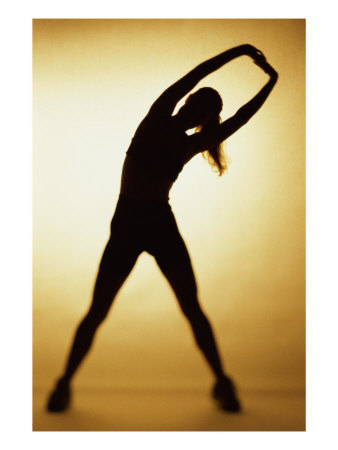
Photo from FitnessTipsForLife.com


We have all heard the fact that a healthy diet and exercise are essential for good health, but how many of us have taken this to heart? If you are one of many people who know you should exercise but just can’t find the time, then you need to know that there are many forms of exercise that can be done for as little as 20 minutes a day. And some of them don’t even require 20 consecutive minutes – they can be done in blocks of just two to five minutes at a time. And if you’ve avoided developing an exercise routine because you think it will require a gym membership or purchasing special equipment or clothes, think again. Many exercises can be done in your office or cubical, or at home before or after work.

Why should you exercise?

Exercise not only reduces feelings of stress, but also fortifies your body against the adverse effects of long-term stress. People who are in better physical health find it easier to cope with daily stress and stressful events in their lives. Physical activity pumps endorphins into your system. Endorphins are the neurotransmitters that act as “happy chemicals” in your brain. This reaction is a mood elevator and helps to improve your sense of wellbeing. Although this is often referred to as a “runner's high,” a rousing game of tennis, a few laps in the pool, or a hike can give you this same feeling.

Much like meditation, exercise can give you the single-minded focus that allows you to let go of the irritation and stress in your life. After trying to hold a pose for yoga, or shooting some hoops in one-on-one with a buddy, you'll find that you've completely forgotten your stressors and concentrated only on your body's movements. As you develop an exercise routine and begin to regularly shed your daily tensions through movement and physical activity, you will find that this focus on a single task, and the resulting improved frame of mind, can help you remain calm and react less whenever stressful events come up.

Exercise can also improve the quality of your sleep, which is often disrupted when you feel stressed. Many of us have jobs that are mostly mental, sitting at a desk all day and taxing our brains. At the end of the day, it can be hard to fall asleep, because our brains have been going full-tilt all day. It can also be difficult to sleep because while our minds are tired, our bodies haven’t gotten any workout at all. Exercise can release our minds from our work problems and give out bodies the physical activity they need.  This eases your stress levels and gives you a sense of control over your physical fitness and your life, and helps you get quality sleep each night.

Making Time for your Health

Many people complain that they don’t have time for an exercise routine. However, as little as 20-30 minutes a day of regular exercise can create a more positive self-image and help to relieve the symptoms associated with stress, depression and anxiety. Think about the things that you spend 20-30 minutes a day doing. Can any of them be eliminated to make room for exercise? The answer is most likely “yes.” Maybe by not watching that one half-hour of television that you don’t really care about, or not surfing Facebook for quite as long. What if you went to bed half an hour later, or got up half an hour earlier? This may seem at first to be counterproductive to feeling healthy; after all, we know we need sleep to relieve stress and feel good. The trick here is that we need good quality sleep – if you are getting good quality sleep, six to seven hours will do you more good than eight to ten hours of restless and interrupted sleep.


Getting Started

It is generally agreed that the most difficult part of an exercise routine is starting it, so this is where you need to be tough on yourself. Write your exercise into your schedule – even if it’s five minutes before your 10am coffee break, five minutes before lunch, and five minutes before dinner and bed. Leave yourself Post-Its that remind you of your exercise, and tell your spouse or partner about it so that they can help you or even join you. It is often easier to stick to a routine when you feel accountable to someone else. Remember to treat your exercise as important – after all, what could be more important than your health? Can you think of anything you do for a half-hour each day that is worth feeling anxious, depressed, and ill? Probably not. Exercising is and should be just as important as that phone call you have to make, that project you have to finish, or the software you have to update.

Stress-Relieving Exercise

So, what kind of exercise will relieve stress? The answer is, anything that gets you moving. There are some simple exercises that can be done while sitting at your desk, which will relieve muscle tension and restore blood flow to tight areas. They can be done several times a day. You can begin by “shaking out” your hands – let them drop to your sides and shake them, as though you had just washed them and wanted to shake the water off. Next, ball your hands into fists as hold for ten seconds, then flex them wide open, straightening and stretching your fingers as far apart as they will go, again for ten seconds. Repeat these three steps (shake, fist, flex) two or three times.

Now, loosen up your shoulders and neck, which often become cramped and strained during desk work. Let your shoulders hang loose at your sides. Slowly rotate them while counting to ten – five times forward and five times backward. Finally, loosen your neck muscles. Drop your chin to your chest. Hold for a count of ten. Then let your head drop to one side, trying to touch your ear to the shoulder, and count to ten. Next, let your head hang back, and try to look at the ceiling behind you. Count to ten. Then do the same with the other shoulder, again trying to touch it with your ear, and count to ten. After stretching to each of these four “points,” straighten your neck and slowly turn your head left and right, turning as far as you can and trying to look over your shoulder. Repeat five times in each direction. Last, rotate your head in a slow circle, touching the same four points that you did earlier (chin, shoulder, back, other shoulder). Repeat five times, clockwise and counterclockwise.

This whole relaxation routine should take a maximum of five minutes, as has been shown to not only relieve tension in the hands, shoulders, and neck, but also to relieve headaches and improve concentration and focus. As an extra activity, take a break every hour or so to focus your eyes somewhere other than you desk or computer screen. Consistently focusing at one distance causes eyestrain and can contribute to tension headaches. If you focus at several different distances frequently throughout the day, it will relieve these symptoms. Make a point of doing this regularly, or even set a reminder alarm on you watch or computer, and you will quickly notice an improvement.

In addition to stretching out at your desk, you should get up and move every hour or so. The best way to remember to do this? Drink more water. No, seriously – not only will drinking more fluids make you get up by causing you to need to use the restroom, it’s been shown that dehydration is a primary cause of headaches, muscle tension, and general drowsiness at work, not to mention weight gain. Drink more, pee more, and be healthier!

Good Posture for Better Health

Another tactic to relieve stress and prevent some fatigue related issues is to learn and maintain good posture. Many people slump over a computer all day and then come home to slump in front of the TV. This leads to back and neck problems, poor digestion, poor circulation, backaches and headaches. There are some easy exercises that will remind you to maintain good posture.

While sitting, place your feet flat on the floor. Slowly rock them back onto your heels, and then rock them forward onto your toes. Rock them back and forth five to ten times, finally allowing them to come to rest flat, with pressure distributed equally on the toes and heels. Keeping your feet flat, rotate your pelvis forward slightly, imagining that you are tucking in your tailbone. With your pelvis tucked, squeeze and release your buttocks five to ten times. You may feel silly doing this, but it both relieves tension from sitting and over time will improve the appearance of your rear end – an extra bonus.

Now, contract your abdominals and sit up tall. Many of us use our lower back muscles a great deal without working the opposing muscles, the abdominals. This leads to weak abdominals and lower back problems. Reminding yourself to pull in your abs and using them to support your spine will help to relieve these issues. In addition, teaching yourself to use your abdominals for support helps prevent muscle strain when you bend over and lift objects, one of the main reasons that people end up needing to see chiropractors.

Next, draw your shoulder blades down and back, allowing them to squeeze your spine, and extend your neck upwards. Imagine that there is a string attached to the crown of your head that is being gently but firmly held up. This will put you neck in proper alignment with your spine. Try to maintain this posture – feet flat, pelvis tucked, abs in, shoulders down and back, and neck stretched tall. At first it will feel like a strain to stay in this position, but the more that you can remind yourself of it, the easier it will get. This posture helps to keep everything in your body – muscles, joints, and internal organs - working and relaxed, leading to better health and lower stress levels.

Away From the Desk

Ready to try some more active exercise? A great one to begin with is just simple walking. While walking, be aware of your posture – all of the points above should be maintained. Focus on walking heel to toe, and looking up instead of at your feet. Of course, it’s nice if you can get outdoors and get some fresh air, but if you are stuck inside a building you can still get relaxation benefits from a walk. Studies have shown that even a ten-minute walk can increase your energy and create a positive mood for a few hours.  You can even begin by parking further from your building, or taking the stairs. Longer walks will help more, so see if you can plan them as an activity with your partner, a friend, or your dog. Many cities have under-utilized parks and pedestrian trails. Check them out and see what your area has to offer.

Once you get used to walking regularly, you may be inclined to try jogging or running. There are many online resources offering plans such as Couch to 5K (http://www.c25k.com/), which help people who are just getting started with running, and include instructions, podcasts, forums, and more. Another option is hiking, if you live in an area that has some trails. Check out websites like Backpacker.com to find information on what’s available near you.

Looking for an exercise that gets you moving but won’t strain your joints? Swimming is the ultimate stress-relieving exercise. The water supports your body, allowing your muscles to relax. And because it’s the lowest of low-impact aerobic exercises, it can be done by anybody, no matter their age or weight. Swimming offers a couple of great ways to release stress. Swimming fast, such as competitive laps, helps burn off aggression, irritation, and anger. The rhythmic nature of swimming helps you to focus on just the activity, letting go of everything else. Slow, languorous swimming acts on stress in another way, by relieving you of fatigue and anxiety while you float and decompress. Combining slow swimming with visualization is a very effective stress-reduction technique. You can combine a period of fast swimming with a slow cool down to get the best results.

Do What You Can, When You Can

These are, of course, just a few suggestions. Any type of exercise will help to relieve stress. You may be interested in something more exotic than jogging – try fencing, belly dancing, or surfing. Aerobic exercise is what is generally recommended, meaning an exercise that elevates your heart rate and blood-oxygen levels for 20 minutes or more. A 30-minute routine including a five-minute warm-up and cool-down is perfect for this. However, while 30 minutes a day four to five days a week should be a goal, some exercise is always better than none. Many people avoid exercising because they think it is time consuming, or that if they can’t stick with a routine every day then they have failed, but that is not what this is about. Exercise when you can, and try to make time for it, but don’t let it become a stressor. You’ll almost certainly find that once you begin, you greatly enjoy the benefits.

Monday, July 25, 2011

Affirmations


From Power Thought Cards by Louise L. Hay

Affirmations are positive statements about what you desire for yourself and your life that are repeated to form new habits of belief. You can create affirmations about anything, from very minor to very important, and you can repeat these affirmations whenever you want, for however long you want. Affirmations have been shown to remap peoples’ minds and provide life-altering results. So how and why do they work?

Our experiences, whether they are physical, mental, or emotional, create connections in our minds. Repetition deepens and strengthens those connections. For a visual analogy, think of dirt road that has been cut into deep grooves by the passage of many cars. The grooves compel any new car to travel in these same grooves on the road. In our brains, the neurons that are used together form a connection. There is a saying saying that, “neurons that fire together, wire together.”

However, if a connection is only used once, it is weak. Repetition strengthens the connection, making it more durable and stable. This is the basis of habit formation, and the reason for repetition of affirmations. Our habits and beliefs are grooves worn into our minds by our life experiences. When we were children, our brains’ physiological structure was formed through our experiences with our environment and the people around us. This is why many of our beliefs can be traced back to our childhood. The wonderful news is that through a little steady work and a short daily routine, we can change these beliefs and “reset” the grooves in our minds to be more positive.

How we interpret our experiences in life is determined by our unique individual beliefs. Constant repetition creates and then strengthens connections in our brains. For example, if as a child you heard it repeated many times that you were overweight, you would have physically created connections in your mind to reinforce the belief of being fat. You would have developed habits and beliefs around being fat, and thus would create a situation to support those deep-set beliefs. Luckily, we can rewire our brains. Introducing and then repeating new affirmations can change the actual physical connections between our neurons. These affirmations, when routinely repeated, can create new neural connections. In a very real physical sense, we can use our words and thoughts change our brains’ physiology and create new beliefs that positively affect our lives.

So how do you find affirmations to create a new routine? Think about what you desire for yourself, and then write it down! You can write your affirmations whenever and wherever you think of them. I have been known to write them on the backs of bill envelopes and receipts, although my favorite vehicle for my affirmations is the Post It note. And if you don’t feel up to writing your own affirmations to start with, there are numerous books on the creation and use of affirmations, as well as books that are simply filled with premade affirmations. These second type of books can be very handy – some people use them to give a “thought for the day” by randomly opening to any page. Others will go through and choose the ones that are most meaningful and mark them, then use them for reference each day. There are also card sets and calendars of affirmations, as well as websites and even software for the technophilic.

Whatever your chosen method of creating or finding affirmations, your set of affirmations are very personal to you, and it is unlikely that anyone else will have the same set of affirmations that you choose. If you are ready to start writing your own affirmations, there are a few guidelines to keep in mind. The first is to always develop your affirmations in the present tense. If the main idea behind affirmations is to train your mind in these new beliefs, then you want your mind to know that these things are true now, not sometime in the unknowable future. For example, if you tell yourself, “I will be in great shape,” then you are not teaching yourself to believe that this is already the case now. You are instead informing yourself that at some point you will be in great shape, but you aren’t now – which means you will never be in shape “now.” If you instead say, “I am in great shape,” then the more that you repeat this the more your subconscious will come to believe it, and the easier it will be for your body to change to suit what your already “know” to be true.

Another important guideline is to always keep your affirmations positive, never negative. Rather than focusing on something negative that you don’t want, instead focus on something positive that you do want. For example, “I find it easy to complete the exam” is a much stronger and more powerful affirmation than “the exam won’t be too hard for me” or “I won’t struggle to complete the exam.” On the surface, it may seem like these affirmations all say the same desired outcome. But the positively stated affirmation is much more clear about your true desire. You don’t want to just get by, you want it to be easy. As human beings, it is often less work for us to think of what we don’t want than what we do want. When you create an affirmation, try to always turn it into a positive statement that truly tells the universe what your desired outcome is. In this same vein, using positive words that seem over-exaggerated can help drive home the point. Although it may feel silly, try saying something like, “the exam is incredibly easy for me to complete.”

The next tip for creating affirmations may seem ridiculous, but you might be amazed how many people fail to do this: write them down! A lot of people, once they get into the groove of thinking up affirmations, will think up a really good one and then only use it once. Why? Because they forgot to write that totally awesome affirmation down, and now it is lost to them. So, no matter where you are, if a great affirmation comes to mind and you can lay your hands on a scrap of paper and a writing implement (or your Blackberry or iPhone), write it down! You can always recopy it later to somewhere more permanent. If you get into the habit of writing down your affirmations, you will begin to develop a wonderful collection of your most positive thoughts for yourself. This is good not only for your daily affirmation routine, but to serve as a reminder when you have a rough day of just how great you believe you can be.

Keep in mind that your affirmations, whatever they are about, should be both short and specific. They should be short for two reasons: it makes them easier to remember, and easier to repeat more frequently. They should be specific because the more specific you make them, the clearer your desires for yourself become.  If your desires are clear, then you will begin to see them manifest in very obvious ways. If you just say, “work is easy for me” and then a new and better coffee pot appears in the break room, you may not connect it with your affirmations at all. This is because when you said “work is easy for me,” what you meant was “my coworkers are kind” and “my boss listens to me” and “my deadlines are easy to meet” and “I find it easy to keep my work area clean.” It appears to you that your affirmations are not working, only because what you are looking for and what you stated were not matched up. If you instead make four or five specific affirmations that detail exactly what you desire for yourself, you will start to see them manifest for you.

The last guideline to consider when creating your affirmations is to personalize them as much as possible. Affirmations are all about you and your life. Use names when dealing with people or pets. Use your name when possible. You can use it to start each affirmation if you like, for example, “I, Sam Smith, get along great with my landlord. He is prompt with repairs and always returns my phone calls.” This allows you to feel as though you are more involved with the affirmations, and as though they are already truths about your life. This can be especially important if you are modifying affirmations that you found in a book or a website rather than created from scratch.

There are also some concepts to focus on when it comes to using your affirmations. First off: repetition, repetition, repetition. When it comes to memory and belief, the more often we hear or see something the more likely we are to remember and believe it. Just think about that office rumor that’s flying around – when you first heard it from someone in the copy room you thought, “Nah, that couldn’t possibly be true.” But then you heard it on break… and at lunch… and as you were passing your boss’ door… and suddenly it became believable because you had heard it so many times from so many to sources. To encourage our minds to accept and believe our affirmations, we must see and hear our affirmations frequently and from different sources.

This is easy to accomplish if you are willing to post your affirmations in several places. Try putting them on Post Its around the house, writing them with whiteboard markers on the bathroom mirror (they come off, I promise!), leaving yourself affirmation notes in your lunch, or sticking them to the edges of your computer monitor. If you have a “notes” or “stickies” program on your computer, put some affirmations there. You can even write up a list of your daily affirmations and print several copies, then post them in every room of the house and at work. I even keep a list in the car, because what better time to work on positive thoughts then when stuck in gridlock at rush hour? Wherever you post them and whatever method you use, it’s best to keep your affirmations readily accessible and visible. Then, whenever you have a spare moment, you can work on your affirmations.

Make time for your affirmations. I know that this seems contrary to the “whenever you have a spare moment” theory, but it is important, especially when you are first beginning to use affirmations. When I say make time, I don’t mean that you need to set aside a huge portion of your day. I recommend about ten minutes a day, broken into two five-minute segments. Many people choose to do these in the morning before getting out of bed and at night before falling asleep. However, you can choose to do your affirmations whenever they will be most helpful and effective for you. Some people prefer to do affirmations while in a meditative state, while others find it beneficial to do them while exercising, while cooking, or while walking the dog. It is your goal to find the right time for you to work on them – and then stick with it! The reason that having a set time is important is that it helps you to form a routine that is easy to maintain.

Last but not least, believe in your affirmations and believe in yourself. If you start to say your affirmations and all you can think about is “but this isn’t real, this isn’t true, this is stupid, why am I doing this” then you should set your affirmations aside and come back to them at a time when you can be more focused and positive.  Always work to believe that what you are saying is happening.  The more you believe, the stronger the affirmations become, and the greater your ability to create the life that you desire.

Monday, July 11, 2011

Instant Techniques: The 5-5-5

Facing the "End of the World"

The 5-5-5 technique is comprised of a series of questions that is very effective in allowing you to take a step back when facing a very difficult or upsetting situation. It can allow you to gain a perspective of “the bigger picture” when you are feeling like the walls are closing in or the world is ending.

We have all faced situations that felt like “the end of the world,” whether it was breaking up with our first boyfriend or girlfriend, or looking at our new car that was just totaled in an accident, or even finding out we didn’t get that promotion we had hoped and worked for for months. In these situations, the 5-5-5 technique can be implemented quickly and can help you calm down and face the situation in a reasonable manner, rather than with a breakdown. It can be essential when these situations arise at a time that you can’t afford to “lose it” and hide in your room crying – such as at the start of a workday, before an important meeting, or before a big exam.

First, Let Go of the Drama

Using the 5-5-5 technique is very simple, but it does require that you be willing to take a step back from yourself and your life.  Some people are in love with the drama of a dire situation to the point that they are unwilling to look at it as anything less than a disaster; unwilling to let go for some reason – the attention they garner from it, or the adrenaline they have pumping through their systems from the panic response, or some other reason unique to them. In this case, the 5-5-5 will not be effective until they can move beyond this point of “needing” the drama.

Five Minutes

If you are ready to use the 5-5-5 technique, you can begin by thinking about the situation that you find yourself in. Try to pinpoint exactly what is making you upset, or fearful, or angry. Then ask your self this question, “How much will this matter in five minutes?” Answer this question honestly. In most situations, the quick answer is “a lot.” However, in a few situations, you may be significantly calmer in 5 minutes, and may be ready to accept that what is done is done.

As an example, imagine that a toddler, be it your own, a friend’s, or even your cousin, has just broken or otherwise destroyed something precious to you. It could have been a book, or a picture, or a piece of pottery – whatever it was, it was irreplaceable. You are furious about the situation, and furious at the child for doing this to you and your belonging. However, as you ask yourself the 5-minutes question, you may realize that your anger is unnecessary. It is only causing you discomfort, and it isn’t going to repair the broken object. Nor is anger at the toddler reasonable or effective – it is extremely unlikely that their behavior was a vicious act. You should allow yourself to feel angry if you need to, but know that in five minutes, you will have begun to let that anger dissipate. In the end, our belongings are just objects – important, yes, but they are not worth being angry at the world.

Five Months

If your answer to the 5-minutes question was simply “a lot,” as in, nothing is going to be better about this in five minutes, then move on to the next question, “How much will this matter in five months?” For the majority of awful events, five months will allow for healing and renewal, and by the end of that period you may not even remember the current trauma. Anyone who has watched a young teen break up with their significant other is aware of this phenomenon – it is the end of the world right now, but in a week or a month they are dating the new love of their life, and all is well.

Taking this perspective may help you to recognize that this is not the end of the world, and that in time, you will heal from it. You can put yourself in the mindset of the “you” that will exist in five months, looking back on this event and knowing that in the long term, it didn’t really matter.  In five months, you may even look back on this event as being a good thing. Take the example of the promotion you just found out you didn’t get. Right now, all you can think about is how hard you’ve worked, how the guy in the next office keeps getting promoted while you get passed over, etc. But think of the possibilities of five months from now. Perhaps this lack of a promotion pushed you to look for other jobs, and you found a much better and more fulfilling one. Perhaps you got promoted the next week or the next month, and to an even better position. Perhaps your husband or wife was transferred a few months later, and now you live somewhere you love, and it was easy for you to give up your old job because you were so dissatisfied. Five months can bring so many wonderful things.

Five Years

Of course, we all have experienced or know someone who has experienced something truly devastating and life-altering. This could be the sudden loss of a spouse, parent, or child. It could be a house-fire. There are many truly traumatic things that we are sometimes forced to deal with. For these, we must ask ourselves the last question, “How much will this matter in five years?” Five years is a very long time in the human lifespan, especially as we look to the future. This time span holds the most possibility for healing, for renewal, and for hope. Literally anything could happen in the next five years. If you feel as though your heart is broken, or you are totally devastated, or your life will never again be filled with love or hope, try to take the biggest step back and think about the potential for yourself in five years.

It’s hard to even picture it, isn’t it? Five years can feel like an eternity when we stop to think about everything that will or can pass between now and then.  Take a few examples of the changes that happen in five years; a baby born today will be starting kindergarten in five years. A high school senior who graduated this year will have graduated with a bachelors’ degree in five years. Whole landscapes will have changed. New homes will have been built, and new families will have been created. A couple on their first date tonight could be married and have children in five years. And yes; your heart, or your finances, or your family, can be healed in five years.

Step Back and Look at the Big Picture

So when you are feeling that you are at the ultimate stress point, that the world is ending, the walls are caving in, and the house of cards is tumbling down, take a few minutes and step back. Try to see the possibilities inherent in the bigger picture. How far you need to step back depends on both you and the situation. Ask yourself, “How much will this matter in five minutes, five months, or five years?” You may even find yourself laughing at the absurdity of how upset you were. At the least, you will hopefully feel some relief.

Thursday, June 30, 2011

The Basics of Stress

What is stress?


For this first blog post, I thought I would begin at the beginning, by answering this most basic question. The American Medical Association (AMA) defines stress as anything that “disturbs a person’s mental well-being.” Stress is not necessarily negative. For example, your mental well-being can be affected by a joyous occasion such as a wedding, vacation, or birth.  For our health, short-term stress from these types of unusual events, is not an overall concern. Chronic (long-term, ongoing) stress is a concern because of its deteriorating effect on health. Studies have shown that high levels of adrenaline and cortisol (stress hormones) can cause deterioration in blood vessels; much like stomach acid wearing away at your stomach lining can cause ulcers. In addition, blood vessels can develop thickened areas that resemble scars, which can then lead to blockages. Long-term exposure to high levels of stress hormones has also been shown to shrink the thymus (the gland responsible for our immune response), making it more likely for us to become ill or develop a disease when we have been under constant stress for a prolonged period.


What causes stress?


Anything and everything can be a stressor, or cause of stress, and it’s largely dependent on the individual as to whether or not an event or situation is interpreted as stressful.  What one person sees as a fun and relaxing activity could be incredibly stressful for another. Take the example of a performance in front of an audience. For the attention-loving drama buff, this could be the highlight of their year. For a shy, introverted person with performance anxiety, this could be the most stressful event of their life. It is a matter of personality, background, and to some extent, attitude and perspective.


Many people cause themselves even further stress by telling themselves that they shouldn’t be stressed about something, or telling themselves that it’s unreasonable, stupid, or childish to be stressed about what they perceive to be a minor event. Your stress response is not something that you should chastise yourself for. Whatever makes you feel stressed is personal to you, and if it activates the stress response in your brain, then is it real and it is important, and it should be dealt with to alleviate your stress.


So what is the stress response?


The stress response is your brain’s reaction to any situation that is perceived as stressful. Our amygdala, a small part of our brain that handles emotional response and the “flight or fight reflex,” is responsible for reacting to stressful events and revving us up to face them. The amazing and sometimes harmful aspect of the stress response is that it can be triggered by events that merely remind us of other more traumatic events from the past. To use an excellent example given in the book The Promise of Energy Psychology by David Feinstein, Donna Eden, and Gary Craig, the reminding event can be something as minor as your spouse saying something to you using a pitch of voice matches that of your parent just before you were punished as a child. You suddenly find yourself angry and upset with your spouse for absolutely no reason (or so it appears to your conscious mind), because your amygdala “recognized” that voice and prepared you for “fight or flight.”


In humanity’s distant past, this function of our brains was extremely useful. Not only did our bodies respond to the stress of, for example, being chased by a predator, but also the next time we encountered the same situation we were even quicker to respond, increasing our chance of survival. However, in the modern world, this has become more of a hindrance than a survival technique, and can even lower our life expectancies significantly. In America, over 70% of all doctor’s visits are stress-related or stress-induced, and we are over 4 times as likely to die of a stroke or heart attack when we live highly stressful lives. In a survey of American workers, almost 50% of interviewees said they regularly feel burnt-out. That percentage is simply much too high.


What can we do?


You can find some techniques that help you to reduce stress as you encounter it, and techniques that help to reshape the way you think about stress in your life. This blog contains both of these types of techniques. Read through them, try out the ones that call to you, and discover the techniques that work best for you. You may choose to read through every entry of this blog, or simply look through the "popular posts" or "blog archive" when you are feeling stressed and want to find some relief. Some of the techniques in these entries can be put to use and be effective immediately, while other require repeated use in order to train your mind to think differently about stressful situations. It is up to you to try techniques that sound helpful, and to implement them when and where you feel that they will be effective for you. Good luck, and remember to breathe!