 |
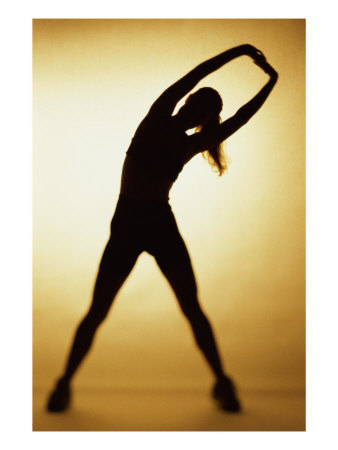
| Photo from FitnessTipsForLife.com |
We have all heard the fact that a healthy diet and exercise are essential for good health, but how many of us have taken this to heart? If you are one of many people who know you should exercise but just can’t find the time, then you need to know that there are many forms of exercise that can be done for as little as 20 minutes a day. And some of them don’t even require 20 consecutive minutes – they can be done in blocks of just two to five minutes at a time. And if you’ve avoided developing an exercise routine because you think it will require a gym membership or purchasing special equipment or clothes, think again. Many exercises can be done in your office or cubical, or at home before or after work.
Why should you exercise?
Exercise not only reduces feelings of stress, but also fortifies your body against the adverse effects of long-term stress. People who are in better physical health find it easier to cope with daily stress and stressful events in their lives. Physical activity pumps endorphins into your system. Endorphins are the neurotransmitters that act as “happy chemicals” in your brain. This reaction is a mood elevator and helps to improve your sense of wellbeing. Although this is often referred to as a “runner's high,” a rousing game of tennis, a few laps in the pool, or a hike can give you this same feeling.
Much like meditation, exercise can give you the single-minded focus that allows you to let go of the irritation and stress in your life. After trying to hold a pose for yoga, or shooting some hoops in one-on-one with a buddy, you'll find that you've completely forgotten your stressors and concentrated only on your body's movements. As you develop an exercise routine and begin to regularly shed your daily tensions through movement and physical activity, you will find that this focus on a single task, and the resulting improved frame of mind, can help you remain calm and react less whenever stressful events come up.
Exercise can also improve the quality of your sleep, which is often disrupted when you feel stressed. Many of us have jobs that are mostly mental, sitting at a desk all day and taxing our brains. At the end of the day, it can be hard to fall asleep, because our brains have been going full-tilt all day. It can also be difficult to sleep because while our minds are tired, our bodies haven’t gotten any workout at all. Exercise can release our minds from our work problems and give out bodies the physical activity they need. This eases your stress levels and gives you a sense of control over your physical fitness and your life, and helps you get quality sleep each night.
Making Time for your Health
Many people complain that they don’t have time for an exercise routine. However, as little as 20-30 minutes a day of regular exercise can create a more positive self-image and help to relieve the symptoms associated with stress, depression and anxiety. Think about the things that you spend 20-30 minutes a day doing. Can any of them be eliminated to make room for exercise? The answer is most likely “yes.” Maybe by not watching that one half-hour of television that you don’t really care about, or not surfing Facebook for quite as long. What if you went to bed half an hour later, or got up half an hour earlier? This may seem at first to be counterproductive to feeling healthy; after all, we know we need sleep to relieve stress and feel good. The trick here is that we need good quality sleep – if you are getting good quality sleep, six to seven hours will do you more good than eight to ten hours of restless and interrupted sleep.
Getting Started
It is generally agreed that the most difficult part of an exercise routine is starting it, so this is where you need to be tough on yourself. Write your exercise into your schedule – even if it’s five minutes before your 10am coffee break, five minutes before lunch, and five minutes before dinner and bed. Leave yourself Post-Its that remind you of your exercise, and tell your spouse or partner about it so that they can help you or even join you. It is often easier to stick to a routine when you feel accountable to someone else. Remember to treat your exercise as important – after all, what could be more important than your health? Can you think of anything you do for a half-hour each day that is worth feeling anxious, depressed, and ill? Probably not. Exercising is and should be just as important as that phone call you have to make, that project you have to finish, or the software you have to update.
Stress-Relieving Exercise
So, what kind of exercise will relieve stress? The answer is, anything that gets you moving. There are some simple exercises that can be done while sitting at your desk, which will relieve muscle tension and restore blood flow to tight areas. They can be done several times a day. You can begin by “shaking out” your hands – let them drop to your sides and shake them, as though you had just washed them and wanted to shake the water off. Next, ball your hands into fists as hold for ten seconds, then flex them wide open, straightening and stretching your fingers as far apart as they will go, again for ten seconds. Repeat these three steps (shake, fist, flex) two or three times.
Now, loosen up your shoulders and neck, which often become cramped and strained during desk work. Let your shoulders hang loose at your sides. Slowly rotate them while counting to ten – five times forward and five times backward. Finally, loosen your neck muscles. Drop your chin to your chest. Hold for a count of ten. Then let your head drop to one side, trying to touch your ear to the shoulder, and count to ten. Next, let your head hang back, and try to look at the ceiling behind you. Count to ten. Then do the same with the other shoulder, again trying to touch it with your ear, and count to ten. After stretching to each of these four “points,” straighten your neck and slowly turn your head left and right, turning as far as you can and trying to look over your shoulder. Repeat five times in each direction. Last, rotate your head in a slow circle, touching the same four points that you did earlier (chin, shoulder, back, other shoulder). Repeat five times, clockwise and counterclockwise.
This whole relaxation routine should take a maximum of five minutes, as has been shown to not only relieve tension in the hands, shoulders, and neck, but also to relieve headaches and improve concentration and focus. As an extra activity, take a break every hour or so to focus your eyes somewhere other than you desk or computer screen. Consistently focusing at one distance causes eyestrain and can contribute to tension headaches. If you focus at several different distances frequently throughout the day, it will relieve these symptoms. Make a point of doing this regularly, or even set a reminder alarm on you watch or computer, and you will quickly notice an improvement.
In addition to stretching out at your desk, you should get up and move every hour or so. The best way to remember to do this? Drink more water. No, seriously – not only will drinking more fluids make you get up by causing you to need to use the restroom, it’s been shown that dehydration is a primary cause of headaches, muscle tension, and general drowsiness at work, not to mention weight gain. Drink more, pee more, and be healthier!
Good Posture for Better Health
Another tactic to relieve stress and prevent some fatigue related issues is to learn and maintain good posture. Many people slump over a computer all day and then come home to slump in front of the TV. This leads to back and neck problems, poor digestion, poor circulation, backaches and headaches. There are some easy exercises that will remind you to maintain good posture.
While sitting, place your feet flat on the floor. Slowly rock them back onto your heels, and then rock them forward onto your toes. Rock them back and forth five to ten times, finally allowing them to come to rest flat, with pressure distributed equally on the toes and heels. Keeping your feet flat, rotate your pelvis forward slightly, imagining that you are tucking in your tailbone. With your pelvis tucked, squeeze and release your buttocks five to ten times. You may feel silly doing this, but it both relieves tension from sitting and over time will improve the appearance of your rear end – an extra bonus.
Now, contract your abdominals and sit up tall. Many of us use our lower back muscles a great deal without working the opposing muscles, the abdominals. This leads to weak abdominals and lower back problems. Reminding yourself to pull in your abs and using them to support your spine will help to relieve these issues. In addition, teaching yourself to use your abdominals for support helps prevent muscle strain when you bend over and lift objects, one of the main reasons that people end up needing to see chiropractors.
Next, draw your shoulder blades down and back, allowing them to squeeze your spine, and extend your neck upwards. Imagine that there is a string attached to the crown of your head that is being gently but firmly held up. This will put you neck in proper alignment with your spine. Try to maintain this posture – feet flat, pelvis tucked, abs in, shoulders down and back, and neck stretched tall. At first it will feel like a strain to stay in this position, but the more that you can remind yourself of it, the easier it will get. This posture helps to keep everything in your body – muscles, joints, and internal organs - working and relaxed, leading to better health and lower stress levels.
Away From the Desk
Ready to try some more active exercise? A great one to begin with is just simple walking. While walking, be aware of your posture – all of the points above should be maintained. Focus on walking heel to toe, and looking up instead of at your feet. Of course, it’s nice if you can get outdoors and get some fresh air, but if you are stuck inside a building you can still get relaxation benefits from a walk. Studies have shown that even a ten-minute walk can increase your energy and create a positive mood for a few hours. You can even begin by parking further from your building, or taking the stairs. Longer walks will help more, so see if you can plan them as an activity with your partner, a friend, or your dog. Many cities have under-utilized parks and pedestrian trails. Check them out and see what your area has to offer.
Once you get used to walking regularly, you may be inclined to try jogging or running. There are many online resources offering plans such as Couch to 5K (http://www.c25k.com/), which help people who are just getting started with running, and include instructions, podcasts, forums, and more. Another option is hiking, if you live in an area that has some trails. Check out websites like Backpacker.com to find information on what’s available near you.
Looking for an exercise that gets you moving but won’t strain your joints? Swimming is the ultimate stress-relieving exercise. The water supports your body, allowing your muscles to relax. And because it’s the lowest of low-impact aerobic exercises, it can be done by anybody, no matter their age or weight. Swimming offers a couple of great ways to release stress. Swimming fast, such as competitive laps, helps burn off aggression, irritation, and anger. The rhythmic nature of swimming helps you to focus on just the activity, letting go of everything else. Slow, languorous swimming acts on stress in another way, by relieving you of fatigue and anxiety while you float and decompress. Combining slow swimming with visualization is a very effective stress-reduction technique. You can combine a period of fast swimming with a slow cool down to get the best results.
Do What You Can, When You Can
These are, of course, just a few suggestions. Any type of exercise will help to relieve stress. You may be interested in something more exotic than jogging – try fencing, belly dancing, or surfing. Aerobic exercise is what is generally recommended, meaning an exercise that elevates your heart rate and blood-oxygen levels for 20 minutes or more. A 30-minute routine including a five-minute warm-up and cool-down is perfect for this. However, while 30 minutes a day four to five days a week should be a goal, some exercise is always better than none. Many people avoid exercising because they think it is time consuming, or that if they can’t stick with a routine every day then they have failed, but that is not what this is about. Exercise when you can, and try to make time for it, but don’t let it become a stressor. You’ll almost certainly find that once you begin, you greatly enjoy the benefits.


Brilliant.
ReplyDelete